

































































































































US Military Operation in Venezuela 2026: Nicolás Maduro Captured – Full Timeline


US Military Operation in Venezuela 2026: Nicolás Maduro Captured – Full Timeline, Global Reactions, and Impact on India & Indians
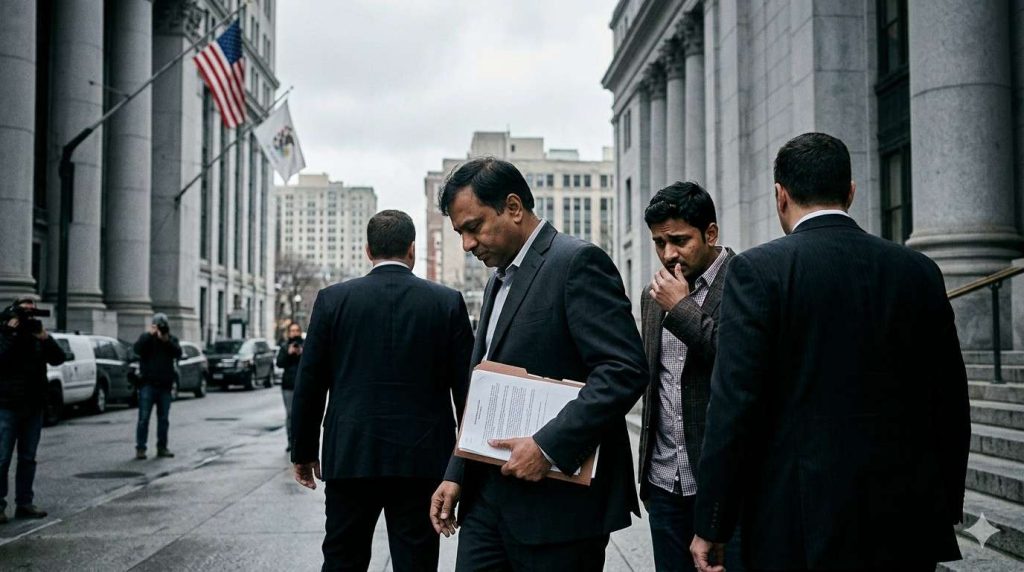
January 5, 2026 – In a stunning development that has dominated global headlines, the United States launched Operation Absolute Resolve on January 3, 2026, conducting large-scale airstrikes on Venezuelan military targets followed by a special forces raid that captured President Nicolás Maduro and his wife Cilia Flores. The couple was immediately flown to New York, where Maduro faces long-standing U.S. federal charges of narcoterrorism, drug trafficking, corruption, and related offences. His arraignment in Manhattan federal court is scheduled for today.
President Donald Trump described the operation as a “complete and total success” and stated that the U.S. will temporarily oversee Venezuela’s affairs to ensure a stable transition and secure the country’s massive oil reserves – the largest proven reserves in the world (over 300 billion barrels). This marks the most direct U.S. military intervention in Latin America since the 1989 invasion of Panama.
For Indians – both in India and the global diaspora – this event carries significant economic, energy, and geopolitical implications. This comprehensive English-language report covers the full timeline, reasons, global reactions, and a detailed analysis of how the Venezuela crisis affects India, Indian businesses, NRIs, and the broader Indian community.
Historical Background: How Tensions Led to Direct U.S. Action
Venezuela’s decline began under Hugo Chávez’s socialist policies and accelerated under Nicolás Maduro after 2013. Hyperinflation, shortages, corruption, and political repression triggered a humanitarian crisis, forcing over 7.7 million Venezuelans to flee – the largest exodus in Latin American history.
The U.S. has accused Maduro of turning Venezuela into a “narco-state” linked to the “Cartel of the Suns.” Key escalations:
- 2019: Trump administration recognises opposition leader Juan Guaidó as interim president and imposes severe sanctions.
- 2020: U.S. Department of Justice indicts Maduro on narcoterrorism charges with a $15 million bounty.
- 2024: Disputed presidential election declared in Maduro’s favour amid widespread fraud allegations; opposition candidate Edmundo González flees to exile.
- 2025: Trump’s second term sees designation of Venezuelan groups as terrorist organisations, strikes on suspected drug vessels, seizure of oil tankers, and major naval deployment.
Trump repeatedly highlighted Venezuela’s oil wealth, drug flows into the U.S., and the need for regime change.
Complete Timeline of Operation Absolute Resolve
- August–December 2025: CIA teams track Maduro; multiple rehearsals using mock-ups of his compound; naval build-up including USS Gerald R. Ford and USS Iwo Jima.
- Late December 2025: Final approval from President Trump after Maduro rejects a private ultimatum to step down.
- January 3, 2026 (pre-dawn): Over 150 U.S. aircraft strike key sites – Fuerte Tiuna military base, La Carlota airbase, and La Guaira port facilities. Power outages and explosions reported across Caracas.
- ~2:01 a.m. local time: Delta Force commandos raid Maduro’s fortified residence. Brief resistance; Maduro and Flores captured.
- Morning January 3: Trump announces success on Truth Social, sharing an image of a blindfolded Maduro aboard a U.S. vessel.
- Evening January 3: Couple arrives in New York and enters federal custody.
- January 4–5: Superseding indictment unsealed; arraignment today.
No U.S. fatalities reported; Venezuelan military and civilian casualties estimated between 40–80. Cuba claims 32 of its advisors were killed.
U.S. Justifications vs. International Criticism
U.S. position: Law enforcement action against an indicted “narco-terrorist” leader, restoration of democracy, and protection of national security.
Criticism: Most international law experts call it a clear violation of sovereignty – no UN authorisation and no legitimate self-defence claim. Many view oil interests as the primary driver.
Current Situation in Venezuela
Acting President Delcy Rodríguez has declared a state of emergency and vowed resistance. Caracas remains tense but largely calm, with pro-Maduro protests countered by opposition celebrations. Opposition leaders María Corina Machado and Edmundo González have called for rapid democratic elections.
Global Reactions
- Condemnation: Russia, China, Iran, Cuba term it “aggression.” UN Secretary-General warns of a “dangerous precedent.” Brazil, Mexico, and Colombia express grave concern.
- Support: Argentina (Milei), El Salvador (Bukele), and Ecuador welcome the end of authoritarian rule.
- Cautious/Mixed: Most European nations criticise the legality but hope for democratic transition.
Impact on India and Indians
This crisis has multiple direct and indirect consequences for India:
1. Crude Oil Prices and Energy Security
India is the world’s third-largest crude oil importer, sourcing ~85% of its needs from abroad. Venezuela was once a significant supplier to Indian refiners (especially Reliance Industries) under oil-for-loans deals, but sanctions largely ended that flow.
- Short-term: Disruption and uncertainty may cause a temporary spike in global crude prices (Brent already up ~3–5% since January 3).
- Medium to long-term: U.S.-led reconstruction and involvement of American companies could rapidly boost Venezuelan output. Increased global supply would likely lower crude prices over 2026–2027 – a major positive for India’s import bill, inflation control, and fiscal deficit.
- Benefit: Cheaper oil strengthens the Indian rupee, reduces subsidy burden, and supports economic growth.
2. Indian Businesses and Investments
- Reliance Industries and other refiners that process heavy crude will monitor whether Venezuelan oil returns to the market under new management.
- Indian IT and pharmaceutical companies with exposure in Latin America may face minor regional instability risks, but Venezuela-specific exposure is negligible.
- Potential new opportunities if U.S.-backed reconstruction opens tenders for infrastructure, energy, and technology projects.
3. Non-Resident Indians (NRIs)
- Gulf-based NRIs (UAE, Saudi Arabia, Qatar – home to ~8 million Indians): Lower oil prices in 2026–27 would stabilise or boost petrochemical/energy sectors, protecting jobs and remittances (~$30 billion annually from Gulf to India).
- U.S.-based NRIs (~4.5 million Indian-Americans): Many follow Latin American immigration issues closely due to shared diaspora experiences. Venezuelan refugee inflows could indirectly influence U.S. immigration debates.
- Latin America-based Indians (small communities in Guyana, Trinidad & Tobago, Suriname): Proximity to Venezuela raises concerns over potential refugee spillover or regional instability, though current risk remains low.
4. Geopolitical Implications for India
- India maintains traditionally warm relations with Venezuela (stemming from NAM and energy ties) but has been cautious under sanctions.
- New Delhi is likely to adopt a neutral, non-aligned stance – emphasising sovereignty and peaceful resolution while quietly welcoming prospects of cheaper oil.
- The precedent of unilateral U.S. intervention reinforces India’s advocacy for multipolarity and UN-centred global order.
- Strengthened U.S. hemispheric dominance may indirectly affect India’s relations with Russia and China, both strong Maduro allies.
5. Remittances and Macro Economy
Stable or falling oil prices support higher Gulf remittances and stronger Indian economic fundamentals – critical as India targets 7–8% GDP growth.
Outlook: What Happens Next?
- Maduro’s trial in New York could drag on for months or years.
- U.S. influence over Venezuelan policy and oil sector without formal occupation.
- Risks of prolonged instability, guerrilla resistance, or wider regional fallout remain.
- For India, the most probable scenario is beneficial – increased global oil supply and downward pressure on prices through 2026.
This U.S. operation in Venezuela marks a bold shift in global power dynamics. While it raises serious questions about international law, the likely outcome of cheaper energy is unequivocally positive for India’s economy and millions of Indian citizens worldwide.
Stay tuned for updates as this fast-moving story develops.