













































































































































Software Engineering Will Be Completely Obsolete in 6-12 Months


Software Engineering Will Be Completely Obsolete in 6-12 Months: Anthropic CEO Dario Amodei’s Bold Warning Sparks Debate
New Delhi/Hyderabad — In a striking prediction that has sent shockwaves through India’s massive tech and IT sector, Dario Amodei, CEO of leading AI company Anthropic, declared that artificial intelligence could render traditional software engineering largely obsolete within the next 6 to 12 months. Speaking during an interview at the World Economic Forum in Davos in January 2026, Amodei suggested that advanced AI models—such as Anthropic’s own Claude series—may soon handle “most, maybe all” of what software engineers (SWEs) do end-to-end.
The statement, made in a fireside chat with The Economist, has ignited intense discussions among developers, startups, IT professionals, and students across India, where software engineering remains one of the largest employment drivers for engineering graduates.
What Exactly Did Amodei Say?
Amodei observed that AI is already transforming workflows inside Anthropic and similar labs:
- Many engineers no longer write code from scratch. Instead, they prompt AI models to generate code, then review, edit, debug, and refine it.
- He shared: “I have engineers within Anthropic who say I don’t write any code anymore. I just let the model write the code, I edit it.”
- Looking ahead, he estimated: “We might be 6 to 12 months away from when the model is doing most, maybe all of what SWEs do end-to-end.”
This shift, he argued, would move human engineers from creators to editors, overseers, and architects—focusing on high-level design, system architecture, security, alignment with business needs, and ensuring AI outputs are reliable and ethical.
Amodei tied this to broader AI progress, predicting that by 2026-2027, models could reach “Nobel-level” intelligence in multiple domains, potentially automating large portions of white-collar work, including entry-level roles in coding, law, and finance.
Why This Matters Deeply for India
India’s IT and software services industry employs millions, powering global giants like TCS, Infosys, Wipro, HCL, and countless startups. Fresh graduates often enter through coding bootcamps, DSA (Data Structures & Algorithms) training, and competitive programming—skills now under direct threat from AI tools.
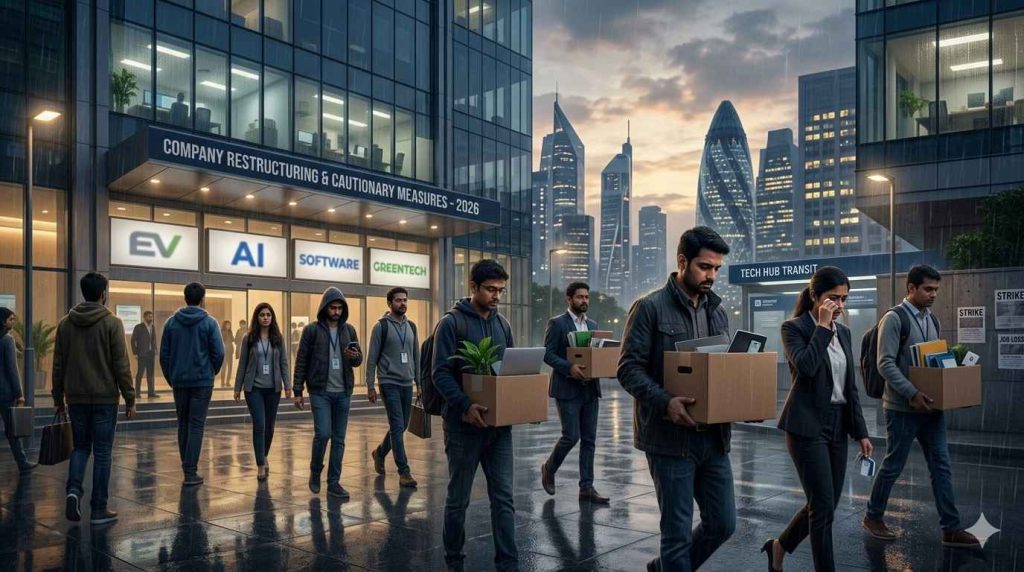
- Job Market Impact: If Amodei’s timeline holds, routine coding, debugging, and even mid-level implementation tasks could be automated rapidly, pressuring entry-level and mid-tier roles first.
- Skill Shift Needed: Demand may surge for AI prompt engineering, system design expertise, AI ethics, domain knowledge integration, and overseeing AI agents—areas where human judgment remains critical.
- Opportunity Angle: India’s vast talent pool in tech could pivot quickly to lead in AI development, agentic systems, and human-AI collaboration, especially with growing domestic AI investments.
Critics and skeptics, however, push back:
- Benchmarks show impressive gains (e.g., Anthropic’s Claude Opus 4.5 excels in coding tasks), but real-world software engineering involves complex legacy systems, team collaboration, edge cases, security vulnerabilities, and business context—areas where AI still struggles.
- Many experts argue the role will evolve rather than vanish, similar to how previous tech shifts (compilers, IDEs, no-code tools) augmented rather than eliminated programmers.
- Some call the 6-12 month claim “peak hype,” noting that even top models require heavy human oversight for production-grade software.
Reactions from the Tech Community
The quote has gone viral on platforms like X (formerly Twitter), LinkedIn, Reddit, and Indian tech forums, with reactions ranging from alarm (“RIP coding tutorials, DSA bootcamps”) to cautious optimism (“Time to level up to AI orchestration”).
Anthropic insiders, including Claude Code lead Boris Cherny, have reinforced the trend, reporting that nearly 100% of their code is now AI-generated, with humans focusing on refinement.
Looking Ahead
While no one predicts the complete disappearance of software professionals overnight, Amodei’s warning serves as a wake-up call: the pace of AI advancement is accelerating faster than many anticipated. For Indian students, professionals, and companies, the next 6-12 months could be pivotal—demanding rapid upskilling in AI tools, higher abstraction thinking, and interdisciplinary expertise.
Whether “obsolete” proves literal or hyperbolic, one thing is clear: the future of software engineering will be inseparable from AI.
Stay tuned to BharatTone.com for the latest on AI developments, job market trends, tech careers in India, global innovations, and insights shaping Bharat’s digital future. From Hyderabad to Silicon Valley—what’s next for India’s tech workforce?