

























































































































Sravana Mangala Gowri Vratam: The Divine Journey of Four Sacred Tuesdays


When the Goddess herself showed married women the path to eternal marital bliss and prosperity
In the mystical realms where time dances to the rhythm of cosmic cycles, there exists a sacred tradition so powerful that it transforms the very essence of married life. The Sravana Mangala Gowri Vratam—a divine journey spanning four consecutive Tuesdays in the blessed month of Sravana—stands as one of Hinduism’s most cherished practices for married women seeking marital harmony, prosperity, and divine protection.
This isn’t merely a story of religious observance; it’s an epic tale of how Goddess Parvati herself became the eternal guide for every wife, showing them the sacred path to marital bliss through devotion, sacrifice, and unwavering faith.
The Celestial Beginning: When Parvati Became the Universal Teacher
Long ago, in the golden age of divine consciousness, when gods walked among mortals and celestial wisdom flowed freely across the cosmos, Goddess Parvati observed the struggles of married women on Earth. Despite their sincere devotion and pure hearts, many faced challenges in their marriages—misunderstandings with spouses, family conflicts, financial hardships, and the constant worry about their children’s future.
Moved by their plight, the compassionate Goddess decided to incarnate as the ultimate example of the perfect wife. But unlike her previous avatars where she displayed her divine powers, this time she chose the path of a devoted human wife, demonstrating that true strength lies not in supernatural abilities but in sincere devotion, patience, and spiritual discipline.
“I shall show every married woman,” declared Parvati to the celestial assembly, “that the secret to marital happiness lies not in changing others but in transforming oneself through sacred practices and unwavering devotion.”
The Divine Experiment: Parvati’s Four-Tuesday Journey
Choosing the auspicious month of Sravana, when cosmic energies are most conducive to spiritual growth, Goddess Parvati began her extraordinary experiment. She decided to observe a special vratam for four consecutive Tuesdays, each representing a different aspect of married life.
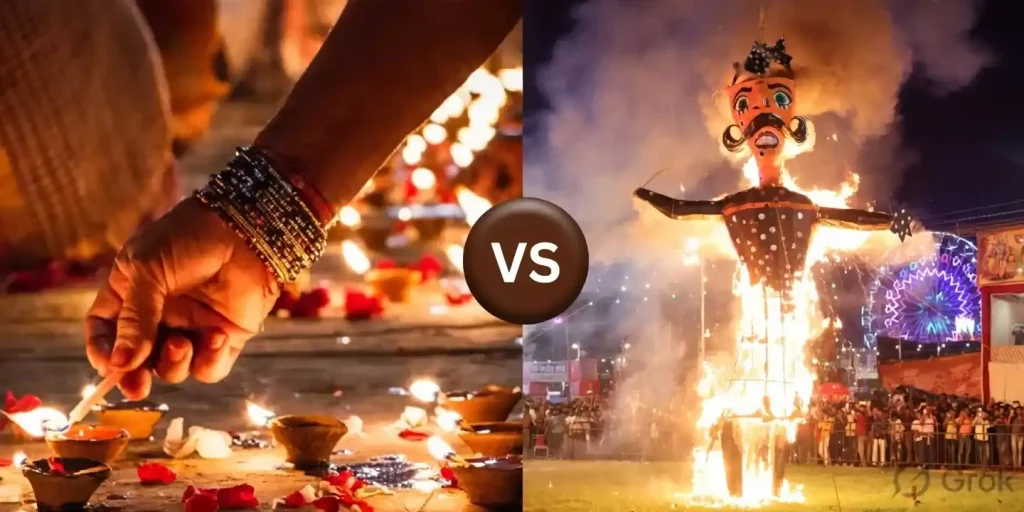
The First Tuesday arrived like a gentle dawn, carrying with it the energy of new beginnings. Parvati rose before sunrise, her divine form radiating the simple beauty of a devoted wife. She bathed in the sacred waters of the Mandakini River, adorned herself in a fresh saree of auspicious red and gold, and approached her personal shrine with the humility of an ordinary devotee.
“Today, I make a sacred sankalpa,” she whispered to the universe, “to complete this vratam with the same faith and determination that I expect from every married woman on Earth.” As she lit the first oil lamp, its flame seemed to carry her prayers across all dimensions, reaching every home where a married woman struggled with her challenges.
The first Tuesday’s significance became clear—it represented Commitment and Sacred Vows. Just as marriage itself begins with vows, the vratam too must begin with a sincere commitment to see the spiritual journey through to completion.
The Second Tuesday dawned with the power of a cosmic storm, yet Parvati’s demeanor remained serene and focused. This day, she understood, was about recognizing and invoking the Divine Feminine Shakti that resides within every woman. She decorated her shrine more elaborately, using flowers that seemed to bloom brighter in her presence, and prepared offerings that would nourish not just the body but the soul.
As she performed the rituals, Parvati transformed momentarily into her Durga aspect—not the fierce warrior, but the protective mother who shields her family from all negativity. “Let every woman who observes this day,” she declared, “discover the immense strength that lies dormant within her. Let her realize that she is not just a wife or mother, but a goddess incarnate, capable of overcoming any obstacle through divine grace.”
The Third Tuesday emerged with the golden radiance of Lakshmi herself, and indeed, Parvati channeled the energy of the prosperity goddess on this sacred day. Understanding that material well-being forms the foundation for spiritual growth, she focused her prayers on Abundance and Prosperity—not mere wealth, but holistic prosperity that includes health, happiness, success, and spiritual fulfillment.
She arranged her offerings in groups of sixteen—sixteen varieties of fruits, sixteen different sweets, sixteen flowers, and sixteen oil lamps—each representing completeness and abundance in Hindu tradition. As she performed the elaborate puja, coins and precious items seemed to multiply in her hands, symbolizing how sincere devotion attracts divine abundance.
“Let no home that observes this vratam know want or scarcity,” she blessed, “but let prosperity flow like an endless river, blessing not just the family but all those who come in contact with them.”
The Fourth Tuesday arrived like a cosmic celebration, bringing with it the culmination of all spiritual energies. This was Mangala Tuesday—the day of ultimate auspiciousness and complete marital harmony. Parvati’s radiance on this day was so magnificent that even Lord Shiva paused in his cosmic dance to witness her devotion.
On this final day, she performed the most elaborate rituals, inviting all the celestial wives—Lakshmi, Saraswati, Ganga, and others—to join her in blessing every married woman who would follow this tradition. The cosmic harmony that resulted from this divine congregation became the template for perfect marital relationships across all realms.
The Divine Revelation: Lord Shiva’s Blessing
As Parvati completed her fourth Tuesday observance, the entire universe resonated with divine vibrations. Lord Shiva, deeply moved by her demonstration of perfect devotion, appeared before her in all his cosmic glory.
“Beloved Parvati,” he said, his voice echoing across dimensions, “your demonstration of perfect devotion as a wife has created a sacred template that will benefit married women for all eternity. I hereby declare that any woman who observes this vratam with the same sincerity you have shown will receive our combined blessings.”
“Her marriage will be strengthened with divine love, her home will prosper with abundance, her children will be virtuous and successful, and she will be protected from all negative influences. Most importantly, she will discover the goddess within herself and become a source of divine energy for her entire family.”
The divine couple’s blessing created a spiritual current that flows even today, reaching every woman who observes the Sravana Mangala Gowri Vratam with genuine faith and devotion.
The Sacred Mysteries: Understanding Each Tuesday’s Power
First Tuesday – The Foundation of Faith (Sankalpa Shakti)
The first Tuesday establishes the spiritual foundation for the entire journey. When a married woman makes her sankalpa (sacred vow) on this day, she connects with the same divine energy that Parvati channeled during her original observance. This day is particularly powerful for:
- Resolving to overcome marital challenges
- Setting positive intentions for family life
- Beginning any new venture with divine blessings
- Strengthening the commitment to spiritual growth
The Hidden Secret: The energy generated by the sankalpa on the first Tuesday creates a protective shield around the family for the entire month, deflecting negative influences and attracting positive opportunities.
Second Tuesday – The Awakening of Inner Power (Shakti Prabodhan)
The second Tuesday activates the dormant spiritual power within every woman. Goddess Parvati revealed that most marital problems arise when women forget their divine nature and get lost in mundane concerns. This day’s observance reminds them of their true identity as embodiments of Shakti. Special benefits include:
- Increased confidence and inner strength
- Better decision-making abilities
- Enhanced intuition and wisdom
- Protection from negative energies and people
- Improved health and vitality
The Hidden Secret: Women who observe this Tuesday with complete devotion often experience prophetic dreams or intuitive insights that guide them toward solutions for family challenges.
Third Tuesday – The Manifestation of Abundance (Samriddhi Yoga)
The third Tuesday creates a direct connection with the cosmic forces that govern prosperity and abundance. Parvati’s energy on this day works like a divine magnet, attracting opportunities and removing obstacles to financial growth. The day brings:
- Unexpected financial opportunities
- Success in business ventures and careers
- Resolution of property or investment issues
- Children’s success in education and careers
- Overall family prosperity and growth
The Hidden Secret: The offerings made on this Tuesday are said to multiply in value—not just materially but energetically, creating a continuous flow of abundance in the devotee’s life.
Fourth Tuesday – The Ultimate Blessing (Purna Mangala)
The fourth Tuesday represents the culmination of all spiritual energies and the bestowal of Parvati’s ultimate blessings. This day carries the power to transform even the most challenging marriages into harmonious partnerships. The final Tuesday’s blessings include:
- Complete marital harmony and understanding
- Resolution of all family conflicts
- Long life and health for the husband
- Virtuous and successful children
- Social recognition and respect
- Spiritual evolution and divine protection
The Hidden Secret: Couples who are blessed on the fourth Tuesday often find that their love deepens and matures, transcending physical attraction to become a spiritual partnership blessed by the divine.
The Ritual Journey: A Step-by-Step Sacred Experience
Pre-Dawn Preparation: Connecting with Divine Energy
Each Tuesday begins in the sacred hours before dawn, when the veil between the physical and spiritual worlds is thinnest. Married women wake during Brahma Muhurta (approximately 4:30-5:30 AM), when cosmic energy is most conducive to spiritual practices.
The ritual bath is not merely physical cleansing but a symbolic purification of body, mind, and soul. Adding a few drops of Ganga water, rose water, or milk to the bath water enhances the spiritual purification. While bathing, women chant:
“Gange cha Yamune chaiva Godavari Saraswati Narmade Sindhu Kaveri jale’smin sannidhim kuru”
Sacred Adornment: Becoming the Goddess
After the purifying bath, women dress in fresh, preferably new clothes in auspicious colors—red for power and protection, yellow for prosperity and knowledge, green for growth and harmony, or white for purity and peace. The act of dressing becomes a sacred transformation, where the ordinary woman prepares to channel divine energy.
Traditional jewelry, flowers in the hair, and the application of tilaka and kumkum are not mere decoration but spiritual tools that help attune the practitioner to cosmic vibrations. Each ornament serves as an antenna for divine energy.
The Sacred Space: Creating a Divine Portal
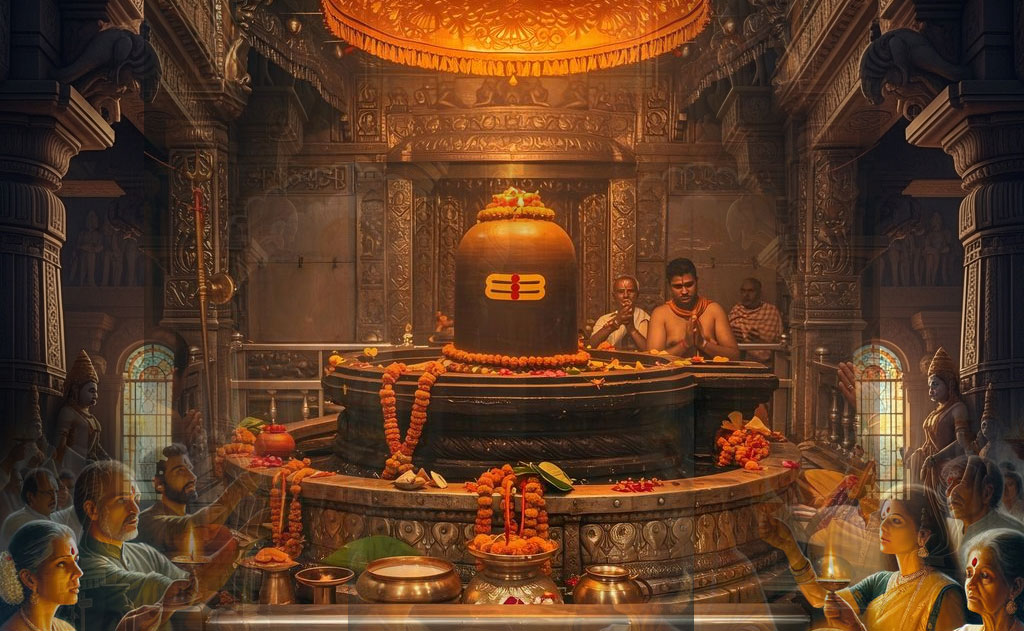
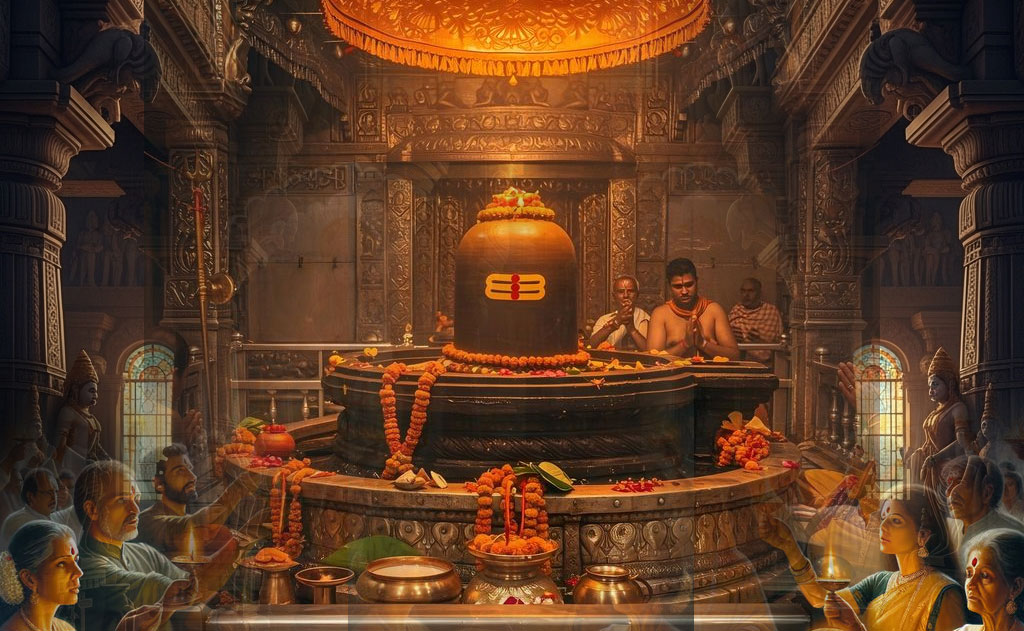
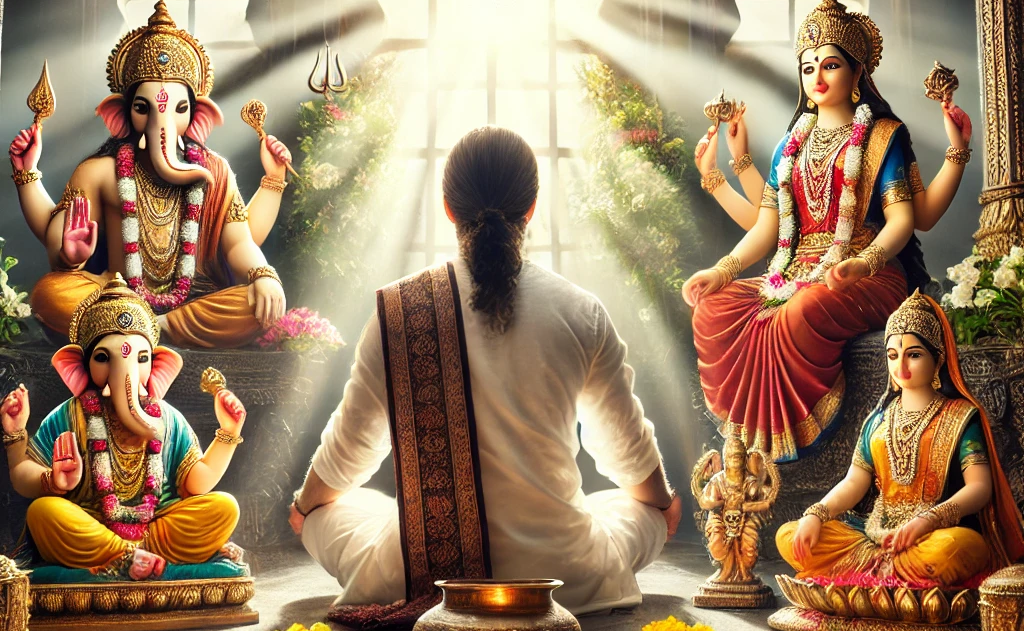
The puja area becomes a temporary temple, a sacred space where heaven and earth meet. The arrangement follows ancient principles of sacred geometry:
- The deity’s image or idol faces east or north
- Oil lamps are placed in specific patterns to create energy vortexes
- Flowers are arranged in mandala patterns
- Water vessels represent the five elements
- Incense creates an aromatic bridge to higher realms
The Ritual Sequence: Dancing with Divine Energy
Each Tuesday’s puja follows a specific sequence that gradually builds spiritual energy:
- Invocation (Avahana): Calling upon the goddess to manifest in the sacred space
- Offering of Seat (Asana): Providing a comfortable place for the divine presence
- Welcome Rituals (Arghya): Welcoming the goddess as an honored guest
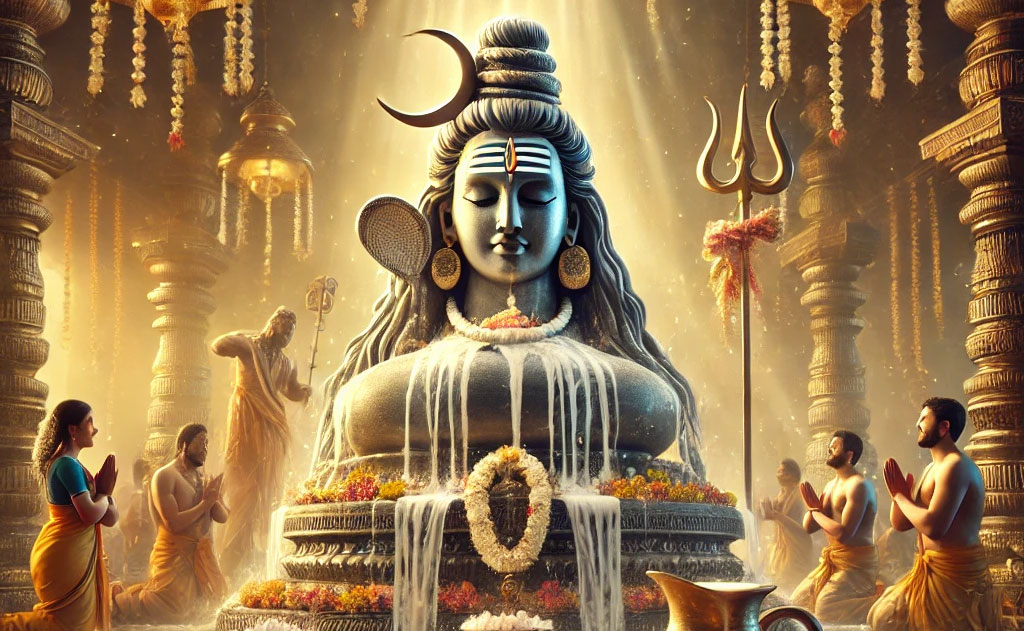
- Bathing Ceremony (Abhisheka): Purifying the deity with sacred substances
- Adornment (Alankara): Decorating the goddess with clothes and flowers
- Food Offerings (Naivedya): Sharing meals with the divine
- Light Ceremony (Deepa): Illuminating the space with sacred fire
- Incense Offering (Dhupa): Creating aromatic prayers
- Prayer Recitation (Mantra Japa): Chanting specific mantras for each Tuesday
- Circumambulation (Pradakshina): Moving around the deity in reverence
- Final Prayer (Pushpanjali): Offering flowers with final prayers
- Blessing Reception (Prasada): Receiving divine grace through blessed food
The Transformative Power: Real Stories of Divine Grace
Meera’s Miracle in Mumbai
Meera, a young software engineer married to Rajesh, faced constant friction in her marriage due to work stress and family pressure. Her mother-in-law was critical, her husband seemed distant, and financial worries kept mounting. Desperate for a solution, she began the Sravana Mangala Gowri Vratam with complete faith.
By the third Tuesday, remarkable changes began manifesting. Rajesh received an unexpected promotion that solved their financial worries. Her mother-in-law, moved by Meera’s devotion, began treating her with warmth and respect. Most importantly, the couple’s communication improved dramatically, leading to a deeper emotional connection.
“It wasn’t magic,” Meera explains, “but the vratam gave me inner strength and changed my perspective. When I changed, everything around me changed.”
Priya’s Prosperity in Pune
Priya’s family had been struggling with her husband’s failing business for three years. Debts were mounting, and they were considering selling their home. As a last resort, Priya’s grandmother suggested the Sravana Mangala Gowri Vratam.
During the fourth Tuesday of her observance, an old business contact unexpectedly called her husband with a lucrative partnership offer. Within six months, not only were their debts cleared, but they had expanded into two new business ventures.
“The goddess didn’t just bring money,” Priya reflects, “she brought wisdom, confidence, and the right opportunities at the right time.”
The Modern Relevance: Ancient Wisdom for Contemporary Challenges
In today’s fast-paced world, where marriages face unprecedented challenges from career pressures, social media influences, and changing family dynamics, the Sravana Mangala Gowri Vratam offers timeless solutions through spiritual transformation.
For Working Couples
Modern dual-career couples often struggle with time management and emotional disconnection. The vratam’s emphasis on dedicated spiritual time together helps couples reconnect on a deeper level, creating shared meaning beyond material success.
For Joint Families
The practice of inviting other married women to participate in the vratam creates supportive communities that help navigate complex family relationships. The collective energy generated during group observances often leads to improved harmony in extended family situations.
For Couples Facing Fertility Challenges
Many couples struggling with conception have found that the vratam’s focus on divine feminine energy and prosperity consciousness creates conducive conditions for new life. While not a substitute for medical treatment, the spiritual support often complements physical interventions effectively.
For Long-Distance Marriages
In cases where spouses must live apart due to work or other commitments, the vratam provides a spiritual connection that transcends physical distance. Many couples coordinate their observances across time zones, creating shared spiritual experiences that strengthen their bond.
The Global Community: Sravana Mangala Gowri Vratam Worldwide
Adaptations Across Cultures
As Hindu communities have spread across the globe, the vratam has adapted to different cultural contexts while maintaining its spiritual essence:
In North America: Hindu temples organize community celebrations where families can observe the vratam together, sharing traditional foods and creating cultural connections for second-generation immigrants.
In Europe: Online communities coordinate virtual observances, sharing puja videos and maintaining real-time connections during ritual performances.
In Australia: Beach-side morning ceremonies take advantage of the natural beauty, with sunrise pujas overlooking the ocean creating powerful spiritual experiences.
In Southeast Asia: Local ingredients and flowers are incorporated into traditional offerings, creating beautiful fusion practices that honor both traditions.
The Scientific Perspective: Understanding the Vratam’s Effects
Neurological Benefits of Ritual Practice
Modern neuroscience has begun to understand what ancient sages knew intuitively—that repetitive spiritual practices create beneficial changes in brain chemistry and neural pathways. The Sravana Mangala Gowri Vratam’s structured approach provides:
- Stress Reduction: Regular meditation and prayer activate parasympathetic nervous system responses
- Enhanced Focus: Ritual concentration practices improve attention span and mental clarity
- Emotional Regulation: Devotional practices release endorphins and reduce cortisol levels
- Social Bonding: Community observances strengthen oxytocin production and social connections
Psychological Empowerment
The vratam’s emphasis on recognizing one’s divine nature has profound psychological benefits:
- Increased Self-Efficacy: Believing in one’s connection to divine power enhances confidence
- Improved Coping Mechanisms: Spiritual frameworks provide resilience during challenging times
- Enhanced Relationship Skills: Focus on devotion and service improves interpersonal dynamics
- Stress Management: Faith-based practices provide effective stress relief tools
The Eternal Legacy: Passing Sacred Wisdom to Future Generations
Teaching Children Sacred Values
One of the vratam’s most important functions is transmitting sacred values to the next generation. Children who grow up witnessing their mothers’ devoted practice naturally absorb lessons about:
- Commitment and Perseverance: Seeing dedication rewarded teaches persistence
- Family Priority: Understanding that relationships require nurturing and attention
- Spiritual Strength: Learning that inner resources can overcome external challenges
- Cultural Pride: Connecting with ancestral wisdom builds identity and confidence
Creating Family Traditions
Many families have developed unique traditions around the vratam observance:
- Recipe Documentation: Preserving traditional offerings through family cookbooks
- Story Sharing: Recording family stories of divine interventions and blessings
- Photo Chronicles: Maintaining visual records of multi-generational observances
- Mentorship Programs: Older women guiding younger practitioners
Conclusion: The Eternal Dance of Devotion
The Sravana Mangala Gowri Vratam stands as one of Hinduism’s most beautiful expressions of the sacred feminine principle working through devoted practice. It demonstrates that true transformation comes not through external changes but through inner evolution guided by divine grace.
When Goddess Parvati first observed this vratam in the celestial realms, she created more than just a religious practice—she established a timeless pathway for married women to discover their own divinity while strengthening the sacred institution of marriage. Every woman who undertakes this journey with sincere faith becomes part of an unbroken chain of devotion that stretches back to the divine mother herself.
In our modern world, where ancient wisdom often seems disconnected from contemporary challenges, the Sravana Mangala Gowri Vratam proves that timeless truths remain eternally relevant. The four sacred Tuesdays offer a structured path to marital harmony, family prosperity, and spiritual growth that transcends cultural boundaries and generational differences.
As each new group of married women discovers the transformative power of this ancient practice, they add their own stories to the vast tapestry of divine grace that Goddess Parvati began weaving so long ago. In their devotion, their struggles, and their victories, the eternal love story of Shiva and Parvati continues to unfold, blessing countless families with the light of divine consciousness.

