










































































































































Elon Musk’s Explosive Claim: AI and Robotics Are the ONLY Way to Make Everyone Wealthy


Elon Musk’s Explosive Claim: AI and Robotics Are the ONLY Way to Make Everyone Wealthy – Here’s Exactly How It Will Happen
December 25, 2025 – Amid global economic turbulence, job insecurity, and rising inequality, Elon Musk has once again dropped a bombshell that is sending shockwaves across the world. In multiple interviews, X posts, and high-profile appearances throughout 2025, the world’s richest man declared with absolute conviction: “There is only basically one way to make everyone wealthy, and that is AI and robotics.”
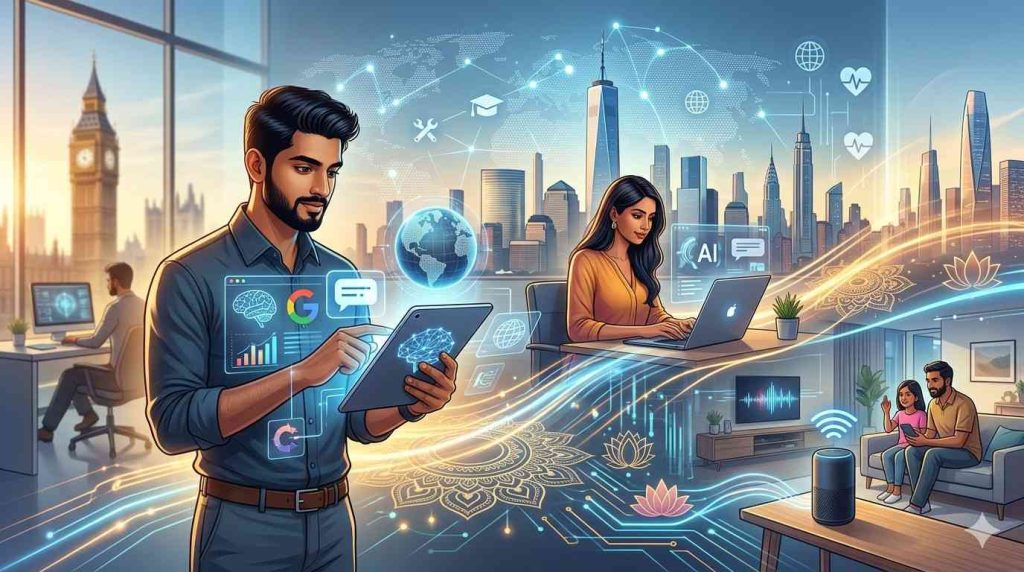
This is not just another tech prediction. Musk sees AI combined with humanoid robotics as the single, unstoppable force capable of ending poverty forever, creating universal high income, making traditional work optional, and ushering in an era of sustainable abundance unlike anything humanity has ever experienced.
As 2025 draws to a close, this vision is no longer distant speculation. The building blocks are already in motion through Tesla’s Optimus robots, xAI’s advanced intelligence systems, and the rapid acceleration of the entire AI-robotics industry. Here’s a clear, step-by-step explanation of how Musk believes this transformation will unfold — and what it could mean for billions of people around the world.
The Core Mechanism: Robots + AI = Explosive Productivity
Musk’s argument rests on a fundamental economic truth: real wealth comes from producing far more goods and services than we consume. For thousands of years, human labor has been the limiting factor — people tire, require years of training, demand wages, and can only work limited hours.
Humanoid robots powered by advanced AI shatter that limitation.
Tesla’s Optimus (also called Tesla Bot) is the flagship example. These are not industrial robotic arms fixed in factories — they are general-purpose, walking, learning machines capable of performing virtually any physical task a human can do — and doing it faster, more precisely, and without ever stopping.
Musk has stated that a single Optimus robot could deliver 5 times the annual productivity of a human worker because it operates 24 hours a day, 365 days a year, with zero fatigue, no sick leave, no salary demands, and no need for breaks.
By late 2025, Tesla has publicly demonstrated Optimus performing complex tasks: folding shirts, running, dancing, executing martial arts movements, handling factory assembly, and even distributing holiday treats on stage. These are not gimmicks — they are proof-of-concept for a future where robots take over nearly all physical labor.
Musk envisions millions, then billions of these robots deployed globally. Tesla plans internal factory use in the thousands by 2026, with mass production driving costs down to $20,000–$30,000 per unit in the coming years. Once labor costs approach zero, the global economy could expand exponentially — potentially 10x, 50x, or even 100x larger — making goods, housing, food, healthcare, energy, and education dramatically cheaper and more abundant.
From Survival Jobs to Optional Hobbies
As robots handle essential and repetitive work, traditional employment will become optional. Musk has described the future vividly: people will pursue work “as kinda like a hobby” — gardening because you enjoy it, not because you need vegetables; painting, music, science, sports, or travel because it brings joy, not because it pays the bills.
But how will people afford to live if paid jobs largely disappear? Musk’s answer is Universal High Income (UHI) — a major evolution beyond the more modest Universal Basic Income (UBI) concept he has discussed for years.
UHI means a high standard of living guaranteed for everyone, funded by the enormous economic surplus generated by AI and robotics. In December 2025 posts on X, Musk explicitly stated: “There will be no poverty in the future and so no need to save money. There will be universal high income.”
In this world, money becomes like oxygen — still present, but so abundant that people stop worrying about it. Everyone could access world-class healthcare, housing, transportation, education, and entertainment without financial stress. Musk describes this as “the capitalist implementation of AI” naturally leading to a “communist utopia” of shared plenty.
The Realistic Timeline: 10–20 Years to Full Abundance
Musk places the major societal shift in a 10 to 20-year window (roughly 2035–2045), with critical milestones arriving much sooner:
- 2025–2027: Early mass production of Optimus begins; thousands deployed in Tesla factories; basic home, service, and industrial tasks automated.
- 2028–2032: Exponential scaling; millions of robots in homes, hospitals, construction sites, agriculture, and more; unit costs drop sharply.
- 2030s onward: Billions of units worldwide; full abundance economy emerges; Universal High Income implemented globally; traditional work becomes truly optional.
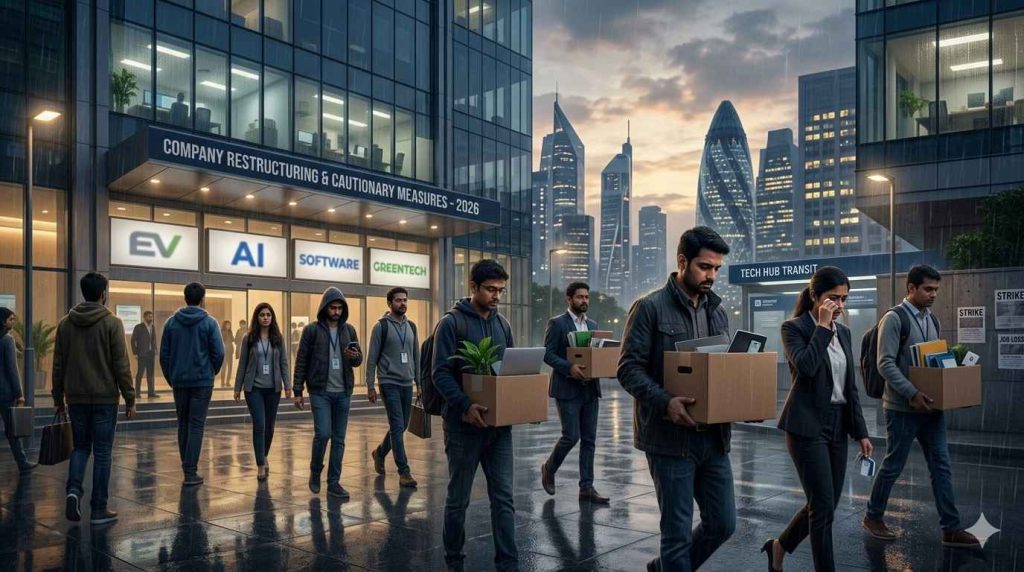
Musk is candid about the transition: “Between now and then, there’s actually a lot of work to get to that point.” Massive job displacement, economic restructuring, and retraining will create turbulence — but the long-term outcome, in his view, is widespread prosperity.
Real Progress Happening Right Now (Late 2025)
The foundation is already being laid at breakneck speed:
- Tesla Optimus continues to showcase increasingly sophisticated capabilities in public demos.
- Competitors like Figure AI, Boston Dynamics, Agility Robotics, and major Chinese firms are accelerating development, proving Musk’s point that “Tesla won’t be the only one.”
- xAI’s Grok models are rapidly advancing toward artificial general intelligence — the “brain” that will power these robots.
- Massive investments in data centers, renewable energy, and compute infrastructure are solving the power and processing bottlenecks.
Musk’s history of defying skeptics — mainstreaming electric vehicles, making rockets reusable, developing neural interfaces — gives this vision serious credibility, even as critics question timelines, wealth distribution, and political feasibility.
The Deeper Challenge: Finding Meaning in an Age of Abundance
The biggest obstacle is not technical — it’s human. When robots outperform humans at almost everything, what gives life purpose?
Musk’s response is profound: the central question shifts from survival to meaning. Freed from the pressure of earning a living, people will pursue art, exploration, relationships, scientific discovery, sports, adventure — whatever truly excites them. Humanity will move from a scarcity-driven existence to a creativity-driven one.
This vision aligns with ideas from thinkers like Peter Diamandis (Abundance) and sci-fi classics like Iain M. Banks’ Culture series — but Musk is betting that private innovation through Tesla, xAI, and others will deliver it in reality.
Challenges and the Road Ahead
Skeptics point to serious hurdles: robotics scaling remains expensive and technically complex; wealth could concentrate in fewer hands if not redistributed equitably; governments and societies may struggle to implement Universal High Income fairly. The transition period could bring significant pain through job losses and economic disruption.
Yet Musk’s unwavering message throughout 2025 remains clear: AI and robotics are not existential threats — they are the only realistic path to making everyone wealthy.
As 2025 ends, the debate is louder than ever: Is this the dawn of a post-scarcity utopia, or an overly optimistic billionaire’s dream? One thing is certain — the conversation about the future of work, wealth, and human purpose has never been more important.
Stay with BharatTone for the latest updates on AI breakthroughs, robotics advancements, and the technologies that will shape India and the world in the years ahead. The age of abundance may be closer than we think — and it could change everything. 


