































































































































































H-1B 2026: US Replaces Lottery with Wage System

Background and Announcement
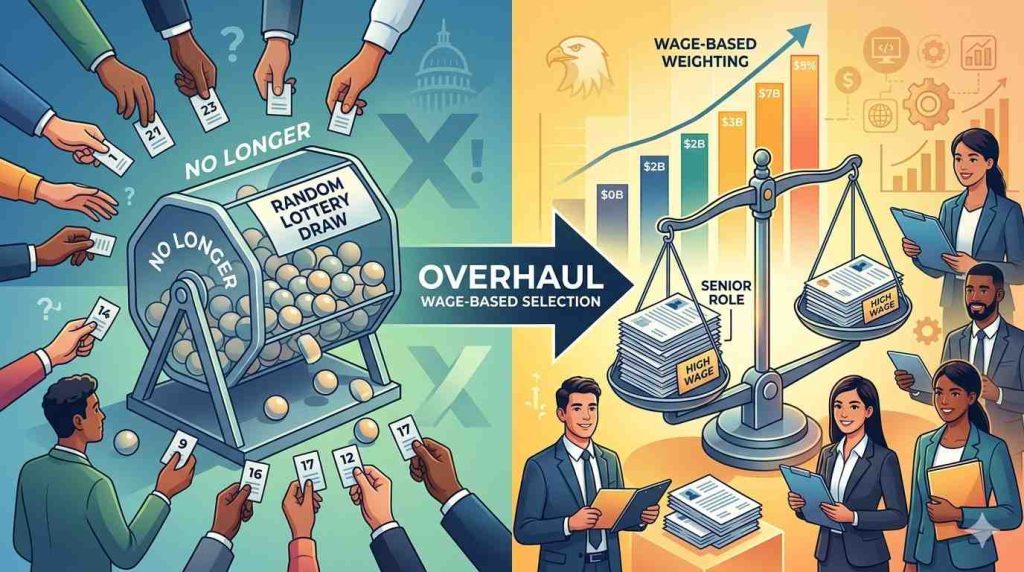
The H-1B program allows U.S. employers to hire foreign workers in specialty occupations requiring specialized skills and knowledge, such as IT, engineering, and other STEM fields. Demand has long exceeded the cap, leading to a random electronic registration lottery each spring when registrations surpass available visas.
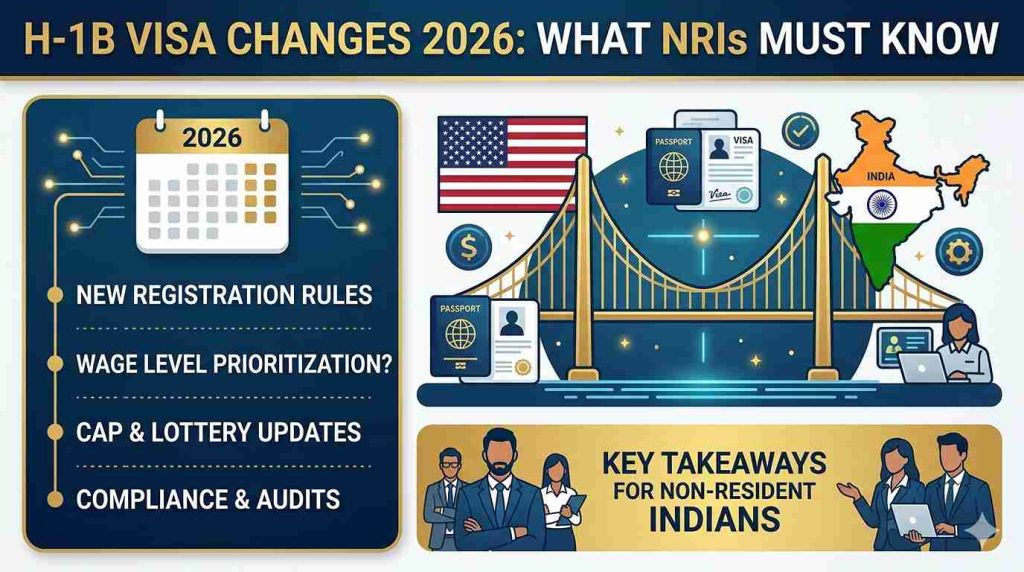
On December 23, 2025, DHS/USCIS announced a final rule (published in the Federal Register on December 29, 2025) amending the selection process. USCIS spokesman Matthew Tragesser stated that the old random system was “exploited and abused by U.S. employers who were primarily seeking to import foreign workers at lower wages than they would pay American workers.” The new approach aims to better protect American workers’ wages, working conditions, and job opportunities while aligning with Congress’s intent for the program and strengthening U.S. competitiveness by incentivizing petitions for higher-paid, higher-skilled roles.
The rule took effect on February 27, 2026, and applied to the FY 2027 H-1B cap registration season (which opened March 4–19, 2026). USCIS has already confirmed it reached the cap under the new system.
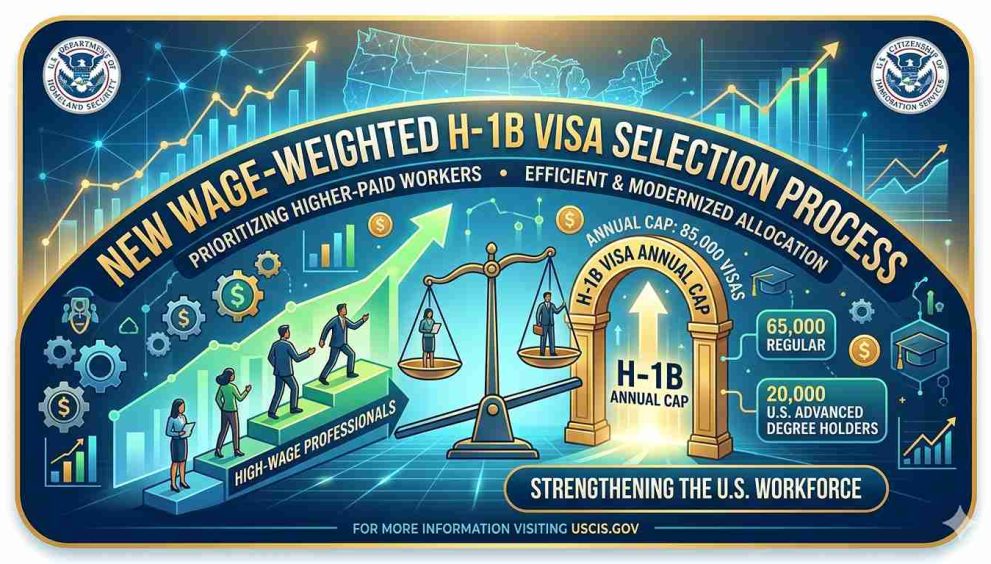
How the New Wage-Weighted Selection Works
The process is not a pure “scrap” of the lottery but a shift to a weighted lottery:
- Registrations still enter a selection pool.
- Each gets multiple entries based on the Department of Labor’s (DOL) four-tier Occupational Employment and Wage Statistics (OEWS) prevailing wage levels for the specific occupation (Standard Occupational Classification or SOC code) and geographic area of employment.
Weighting:
- Wage Level IV (highest, often fully competent/expert or supervisory roles) → 4 entries
- Wage Level III (experienced) → 3 entries
- Wage Level II (qualified) → 2 entries
- Wage Level I (entry-level, basic supervision) → 1 entry
USCIS determines the level based on the offered wage relative to OEWS data for the job and location. Higher wages (corresponding to higher levels) give significantly better odds. Level IV offers roughly double the selection probability of Level I in projections. The system still allows selections across all wage levels but tilts the odds toward higher ones.
This builds on prior beneficiary-centric changes (one registration per unique beneficiary) and ties into a September 2025 Presidential Proclamation directing prioritization of high-skilled, high-paid workers, which also imposed a $100,000 additional fee on certain new H-1B petitions (e.g., for workers abroad or requiring consular processing).
Reasons for the Change
- Protect U.S. workers: Critics argued the random lottery encouraged employers (especially in outsourcing/IT consulting) to flood the pool with low-wage registrations, undercutting American salaries and opportunities.
- Reduce abuse: Multiple low-wage entries from the same or related employers skewed outcomes.
- Align with program goals: Emphasize skills and compensation over chance, incentivizing better job design and pay.
- Economic impact projections (per DHS): Higher overall wages paid to H-1B workers, increased productivity, and tax revenue benefits.
Note: A separate DOL proposed rule (March 2026) seeks to raise prevailing wage percentiles across levels (e.g., Level I from ~17th to 34th percentile), which could further increase required salaries if finalized.
Impact on Employers and Applicants (Especially from India)
- Employers: Must now align job offers, titles, and salaries more carefully with OEWS data to maximize odds. Low-wage or entry-level roles face lower chances; companies may raise offers or redesign positions for higher levels. Early planning with HR, compensation, and immigration teams is essential. The $100K fee (where applicable) has already reduced some registrations.
- Applicants: Entry-level or lower-wage candidates (common for recent graduates) see reduced odds; mid-to-senior or higher-paid roles benefit. Indian professionals (who receive a large share of H-1Bs) are heavily affected, as many enter via student/OPT routes before H-1B.
- Overall registrations: FY2027 saw a sharp drop compared to prior years’ hundreds of thousands (some reports noted ~220k vs. previous peaks near 760k), likely due to the fee and new weighting. This improved selection rates even for some lower-wage cases.
- Practical effects: Fewer “lottery-only” strategies; more focus on genuine high-value roles. Some outsourcing-heavy filers scaled back.
The FY2027 lottery under the new rules has already concluded, with selections notified for cap-subject petitions (employment can start October 1, 2026).
Broader Context and Reactions
This fits the Trump administration’s “America First” immigration reforms, including prior H-1B integrity measures. Supporters view it as curbing replacement of U.S. workers and raising standards. Critics (including some tech firms and immigrant advocates) argue it disadvantages young talent, recent international graduates, and smaller employers, potentially harming innovation and the U.S. tech pipeline.
Legal challenges to related measures (e.g., the $100K fee) have been filed, but the weighted selection rule has taken effect.
Employers and beneficiaries should consult USCIS.gov for exact OEWS tools, SOC codes, and filing guidance. Strategies now emphasize competitive compensation, accurate wage level attestations, and exploring cap-exempt options (e.g., nonprofits, universities) where possible.
This reform marks a significant shift from pure randomness to a merit-and-compensation-tilted system while keeping the annual numerical cap intact. For the latest details, check official USCIS announcements or the Federal Register rule.

