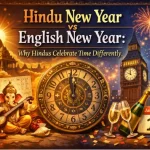
































































































































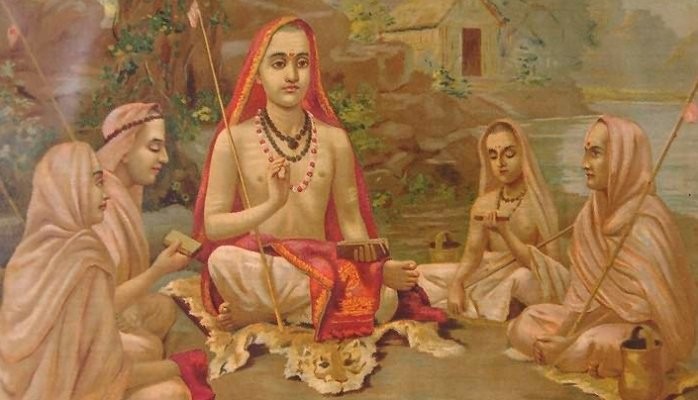


Is Celebrating English New Year Against Hindu Culture? A Balanced Dharmic Perspective


Is Celebrating English New Year Against Hindu Culture? A Balanced Dharmic Perspective
Introduction: A Question Every Hindu Family Debates
Every January 1st, the same question emerges in Hindu households, social media discussions, and family WhatsApp groups:
“Is celebrating English New Year against Hindu culture?”
Some argue passionately that January 1st represents colonial imposition and cultural erosion. Others dismiss these concerns, viewing it as a harmless global celebration—a chance to reflect, reset, and reconnect with loved ones. Between these extremes, many Hindus feel caught, uncertain about how to honor tradition while participating in a globalized world.
The answer is neither simple nor absolute.
Hindu civilization has endured for millennia not by rigidly rejecting everything foreign, but by absorbing selectively while preserving its essential identity. This article presents a balanced dharmic perspective—free from moral policing, cultural guilt, or extremism—examining whether celebrating English New Year truly conflicts with Hindu values and Sanatana Dharma.
Is English New Year Against Hinduism? The Nuanced Answer
No, celebrating English New Year is not inherently against Hinduism—provided it doesn’t replace or diminish Hindu cultural consciousness.
Hinduism is not a rigid, date-bound religion with absolute prohibitions. It is Sanatana Dharma—an eternal way of life that emphasizes conscious awareness, balance (madhyama marga), and intentionality over blind conformity to rules.
The genuine concern arises not from celebration itself, but from:
- Cultural replacement rather than cultural addition
- Forgetting Hindu New Year traditions like Ugadi, Gudi Padwa, Vaisakhi
- Losing awareness of indigenous astronomical timekeeping
- Gradual identity erosion across generations
To properly understand this issue, we must distinguish between healthy cultural adoption and problematic cultural replacement.
Cultural Adoption vs Cultural Replacement: Understanding the Difference
What Is Healthy Cultural Adoption?
Cultural adoption occurs when a society:
- Participates in global or external practices
- Without abandoning its indigenous traditions
- While maintaining conscious awareness of its roots
- Adds new elements without subtracting core identity
Practical examples in Hindu society:
- Using the Gregorian calendar for professional and administrative purposes
- Wearing Western clothing for convenience or specific occasions
- Acknowledging international days like New Year’s Day socially
- Speaking English while preserving regional languages at home
This kind of adoption is pragmatic, neutral, and demonstrates cultural flexibility—a traditional Hindu strength.
What Is Problematic Cultural Replacement?
Cultural replacement happens when:
- Indigenous traditions are gradually forgotten
- Native festivals lose significance and emotional importance
- Imported practices become the unchallenged “default” identity
- Younger generations lack awareness of their own heritage
Examples of cultural replacement:
- Celebrating January 1st with enthusiasm and expense
- While being completely unaware of Ugadi, Gudi Padwa, Puthandu, or Vaisakhi dates
- Knowing precise New Year’s Eve countdown timings
- But not knowing when or why the Hindu New Year begins
- Children recognizing Santa Claus but not understanding Hindu deities
- Making New Year resolutions but not understanding dharmic self-reflection practices
This is where legitimate concern emerges—not in the act of enjoyment, but in the slow erosion of cultural identity and intergenerational memory.
The Hindu View on Time and New Year: Beyond Calendar Dates
Time as Sacred Consciousness (Kala)
In Hindu philosophy, time (Kala) is not merely a sequence of numbered days. It is a sacred, cosmic force governed by:
- Surya (the Sun) – governing solar years and seasonal cycles
- Chandra (the Moon) – governing lunar months and tithis
- Ritus (seasons) – six distinct periods aligned with nature
- Graha (planetary movements) – influencing cosmic energies
- Yugas (cosmic ages) – vast cycles of universal time
This is why Hindu New Year celebrations align precisely with:
- Solar transitions – Ugadi, Vaisakhi, Vishu, Puthandu (spring equinox region)
- Lunar cycles – Chaitra Shukla Pratipada (new moon in Chaitra month)
- Agricultural renewal – sowing seasons and harvest beginnings
- Cosmic energy shifts – Uttarayana (Sun’s northward journey)
January 1st: An Administrative Construct
January 1st, by contrast:
- Is an administrative date established by Roman and Christian authorities
- Named after Janus, a Roman god unrelated to Indic civilization
- Has no ecological significance in the Indian subcontinent
- Lacks astronomical or cosmic alignment with Indian geography
- Was imposed during British colonial rule for bureaucratic convenience
Recognizing this historical context is cultural awareness—not rejection, hatred, or narrow-mindedness.
Enjoyment vs Identity Loss: Where to Draw the Line
Enjoyment Itself Is Not the Problem
Sanatana Dharma does not oppose:
- Ananda (joy and happiness)
- Utsava (celebration and festivity)
- Samaja (social bonding and community)
- Atma-vichara (self-reflection and goal-setting)
Enjoying a New Year’s dinner, watching fireworks, or wishing friends well on January 1st violates no Hindu principle whatsoever. Hindu scriptures consistently emphasize:
- Madhyama Marga (the middle path of balance)
- Harsha (joy with awareness and restraint)
- Chetana (consciousness in all actions)
The Bhagavad Gita teaches moderation in all things—neither excessive indulgence nor harsh denial, but conscious, balanced living.
Identity Loss Happens Gradually, Almost Invisibly
Cultural identity isn’t lost in dramatic moments. It erodes slowly, imperceptibly, when:
- January 1st becomes “THE” New Year emotionally and financially
- Hindu New Year becomes an afterthought or “village tradition”
- Children grow up completely unaware of traditional calendars and their astronomical basis
- Cultural memory fades within just one or two generations
- Traditional wisdom becomes labeled as “backward” or “outdated”
- Indigenous knowledge systems are replaced rather than complemented
The real issue isn’t celebrating January 1st—it’s forgetting who we are, where we come from, and what our civilization has contributed to humanity while doing so.
A Practical Dharmic Approach: Conscious Celebration
A balanced Hindu perspective rejects both extremes. It encourages mindful, conscious participation rather than blind rejection or uncritical adoption.
1. Acknowledge January 1st, Don’t Worship It
You can and should:
- Warmly greet friends and colleagues
- Thoughtfully reflect on personal and professional goals
- Enjoy social gatherings with family and friends
- Use the date as a practical calendar marker
But remain conscious that:
- It is a global civic date for administrative convenience
- Not a spiritual, cosmic, or cultural Hindu milestone
- Not rooted in Bharatiya civilization or dharmic wisdom
2. Give Hindu New Year Its Rightful Importance
Make sincere efforts to:
- Know when your regional Hindu New Year falls (use Panchanga apps)
- Celebrate it with family through traditional rituals and customs
- Explain its astronomical and spiritual meaning to children
- Invest emotional and financial resources proportionally
Regional Hindu New Years deserve equal—if not greater—importance:
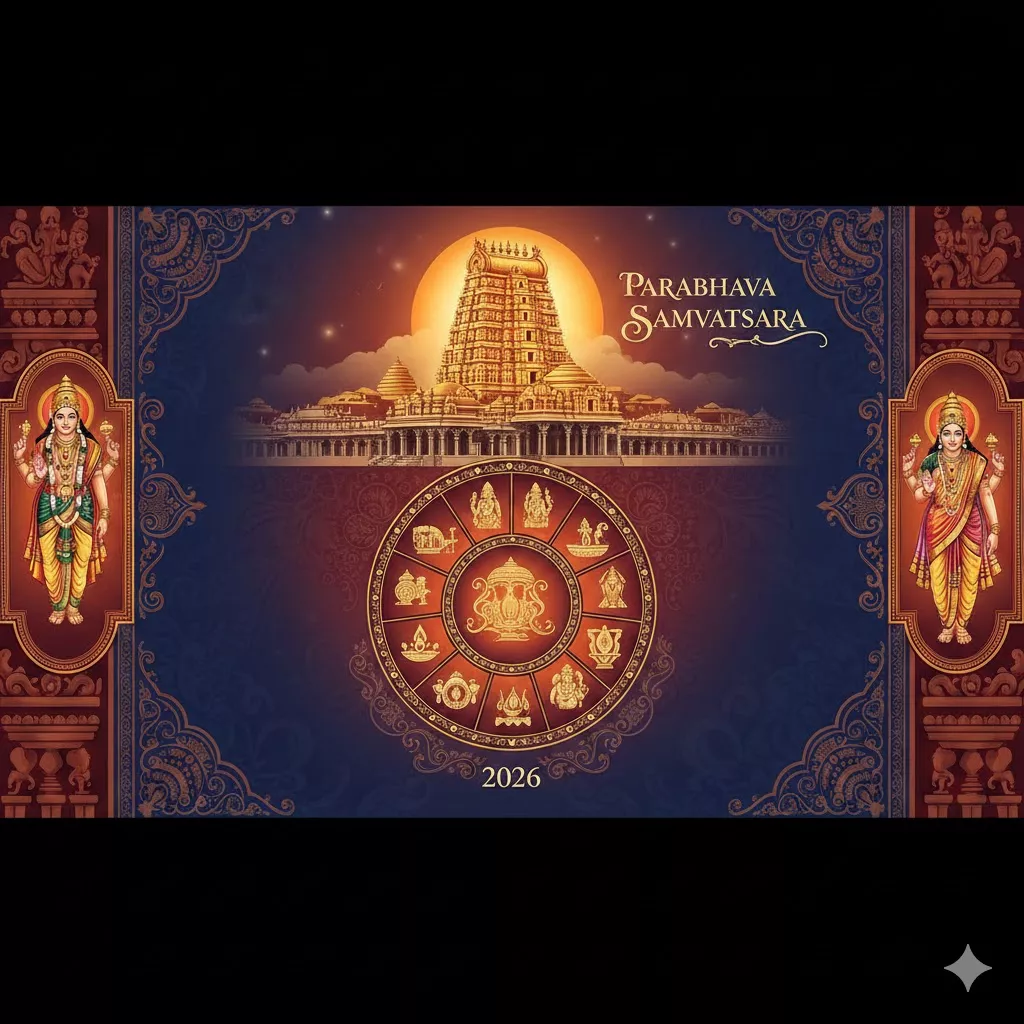
- Ugadi (Karnataka, Andhra Pradesh, Telangana)
- Gudi Padwa (Maharashtra)
- Puthandu (Tamil Nadu)
- Vaisakhi (Punjab, North India)
- Vishu (Kerala)
- Pohela Boishakh (Bengal)
- Bestu Varas (Gujarat – after Diwali)
3. Avoid Both Self-Denial and Self-Forgetting
Two dangerous extremes:
- Rigid rejection of everything Western creates isolation, rigidity, and cultural insecurity
- Complete forgetting of everything indigenous creates rootlessness, identity crisis, and civilizational amnesia
The dharmic middle path:
Hindu civilization has always thrived through intelligent integration, not thoughtless imitation. We can participate in global culture without dissolving our distinctive identity.
4. Teach Context and Knowledge, Not Fear or Guilt
Instead of telling children: “Celebrating English New Year is against our culture” (creates guilt and confusion)
Explain with clarity: “January 1st is a global calendar event used worldwide for administration. But our traditional New Year—calculated through astronomy—aligns with nature, seasons, and cosmic cycles. Both exist for different purposes. Understanding both makes you culturally confident, not confused.”
Knowledge, understanding, and pride are far more effective than prohibition, guilt, or fear in transmitting culture.
Why This Balanced Perspective Matters in Modern Bharat
The Reality of Globalization
In today’s interconnected world:
- Hindus live across all continents and time zones
- Cultural boundaries constantly overlap and interact
- Identity formation happens through conscious awareness, not mere geography
- Digital media exposes everyone to multiple cultural influences simultaneously
Cultural Confidence, Not Insecurity
A truly confident, mature civilization:
- Does not feel threatened by external dates, calendars, or celebrations
- Survives and thrives because its people deeply know what belongs to them
- Can participate in global culture while maintaining distinctive identity
- Welcomes dialogue and exchange without fear of dissolution
Celebrating English New Year socially while honoring Hindu New Year spiritually and culturally is not hypocrisy, contradiction, or weakness—it is cultural maturity and dharmic wisdom in action.
Final Verdict: Is English New Year Against Hindu Culture?
The Clear Answer
No, celebrating English New Year is not against Hindu culture.
However, replacing Hindu New Year with English New Year—emotionally, spiritually, and culturally—represents a loss of civilizational awareness and identity.
The Dharmic Teaching
Sanatana Dharma has always taught:
- Live fully in the world (vyavaharika satya)
- But don’t forget your essential roots (paramarthika satya)
- Adapt intelligently (yukti)
- Without dissolving your identity (dharma)
The Practical Distinction
- January 1st can be a moment of social reflection, goal-setting, and global connection
- Hindu New Year is a moment of cosmic renewal, dharmic alignment, and spiritual rejuvenation
Knowing the difference, celebrating both appropriately, and teaching this wisdom to the next generation—this is the real celebration of consciousness and culture.
Frequently Asked Questions: Hindu Perspective on New Year
Is celebrating English New Year against Hinduism?
No, Hinduism does not forbid celebrating English New Year. Sanatana Dharma emphasizes conscious awareness over rigid prohibition. The concern arises only when January 1st replaces awareness and celebration of traditional Hindu New Year customs, leading to cultural amnesia.
What is the authentic Hindu view on New Year celebrations?
Hindu culture views New Year as a cosmic and natural transition aligned with solar movements, lunar cycles, and seasonal changes—not an arbitrary administrative date. Different regions celebrate at different times based on astronomical calculations (Ugadi, Vaisakhi, Vishu, Puthandu, Gudi Padwa).
Can Hindus celebrate both English New Year and Hindu New Year?
Absolutely. Hindus can acknowledge and participate in English New Year socially and professionally while celebrating Hindu New Year with full spiritual, cultural, and emotional significance. This represents balance (madhyama marga), not contradiction.
Why do some Hindus oppose celebrating January 1st?
Concerns stem from: cultural replacement rather than addition, colonial historical context, gradual forgetting of indigenous astronomical knowledge, erosion of traditional festival importance, and loss of civilizational identity across generations. The opposition is to amnesia, not to joy.
How should dharmic Hindus approach New Year celebrations?
Celebrate January 1st in moderation as a global civic date while consciously celebrating and teaching Hindu New Year traditions at home and in community. Maintain awareness of both calendars’ origins and purposes. Teach children context, not prohibition.
What makes Hindu New Year different from English New Year?
Hindu New Year is based on precise astronomical calculations, aligned with solar/lunar cycles, connected to agricultural seasons, rooted in ancient scientific texts like Surya Siddhanta, and carries deep spiritual significance. English New Year is an administrative date with Roman-Christian origins and no cosmic alignment.
Is using the Gregorian calendar against Hindu culture?
No, using the Gregorian calendar for professional, administrative, and global coordination purposes is pragmatic and neutral. The concern is when it completely replaces awareness of traditional Panchanga (Hindu almanac) and indigenous timekeeping wisdom.
How can Hindu parents teach children about New Year traditions?
Celebrate Hindu New Year with traditional rituals, explain the astronomical basis in age-appropriate ways, use Panchanga apps together, connect celebrations to nature and seasons, share stories from Puranas and Itihasas, visit temples during Hindu New Year, and model balanced participation in both calendars with clear explanations.
Conclusion: Dharmic Wisdom for Modern Times
Hindu civilization has survived invasions, colonization, and globalization precisely because it combines:
- Adaptability (flexibility in external practices)
- Stability (firmness in core principles)
- Consciousness (awareness in all actions)
- Balance (middle path in all things)
Celebrating or acknowledging January 1st doesn’t make you less Hindu. Forgetting Ugadi, Vaisakhi, or Gudi Padwa while obsessing over January 1st might indicate a gap in cultural awareness worth addressing.
The path forward is neither rigid rejection nor thoughtless adoption—it is conscious integration with clear understanding.
When we celebrate with awareness, teach with knowledge, and practice with balance, we honor both the timeless wisdom of Sanatana Dharma and the practical realities of living in a connected world.
This is not compromise. This is dharma in action.
About BharatTone: BharatTone celebrates Bharatiya culture, dharmic wisdom, and Hindu civilization through balanced, informed perspectives. We help modern Hindus navigate tradition and modernity with confidence and clarity.
Related Articles:
- Understanding Hindu Calendar Systems: Science Behind Traditional Timekeeping
- Regional Hindu New Year Celebrations: Complete Guide to Ugadi, Vaisakhi, and More
- Teaching Hindu Culture to Children: Practical Strategies for Modern Parents
- Colonial Impact on Hindu Traditions: Historical Context and Contemporary Relevance
- Sanatana Dharma in Modern Life: Applying Ancient Wisdom Today
Published: December 2025 | Updated regularly to serve the Hindu community
Share your perspective: How does your family approach New Year celebrations? Join the conversation in comments below.